
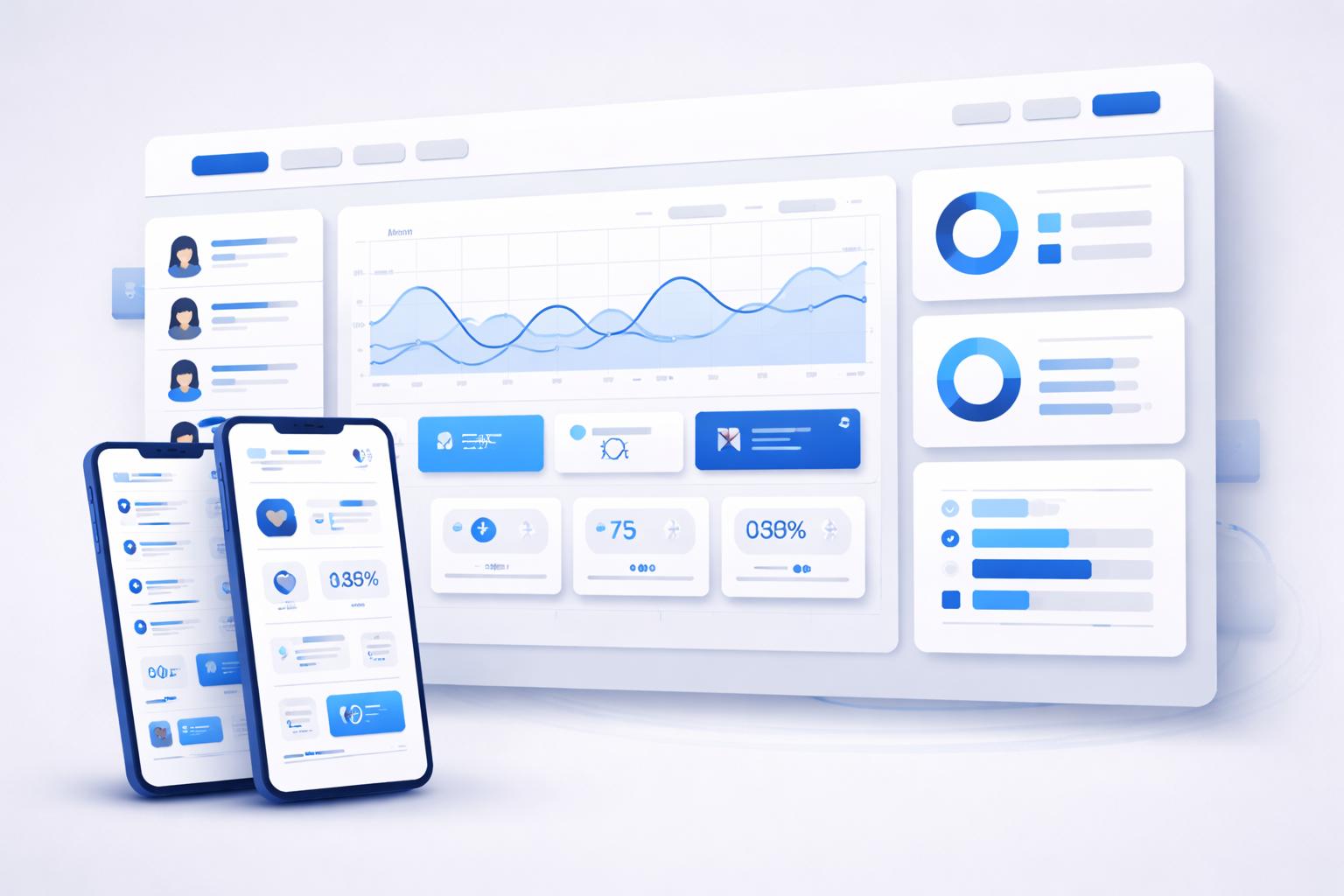
Healthcare Software Development Guide
Learn how clinics and HealthTech startups can plan, build, and scale secure healthcare software that improves patient experience, reduces manual work, and supports long-term growth.
Healthcare teams are under pressure from every side.
Clinics want fewer manual tasks, faster appointments, smoother billing, better patient communication, and safer data handling. HealthTech startups want to launch faster, prove product-market fit, integrate with existing systems, and build trust with providers, patients, and investors.
This is where custom healthcare software development becomes valuable.
Instead of forcing your clinic or startup to adjust around a ready-made tool, custom software is built around your exact workflow. It can support appointment scheduling, patient portals, telehealth, EHR/EMR systems, billing automation, care coordination, analytics, mobile apps, and secure integrations.
But healthcare software is not like building a normal business app. It deals with sensitive patient data, clinical workflows, compliance expectations, role-based access, audit trails, third-party integrations, and real people who need care without friction.
What Is Custom Healthcare Software Development?
Custom healthcare software development means designing and building digital solutions specifically for healthcare organizations, clinics, hospitals, medical networks, diagnostic centers, or HealthTech startups.
It is not a one-size-fits-all product.
A custom solution is created around your real operations, such as how your staff books appointments, how patients submit information, how doctors view records, how billing is handled, how reminders are sent, or how different systems exchange data.
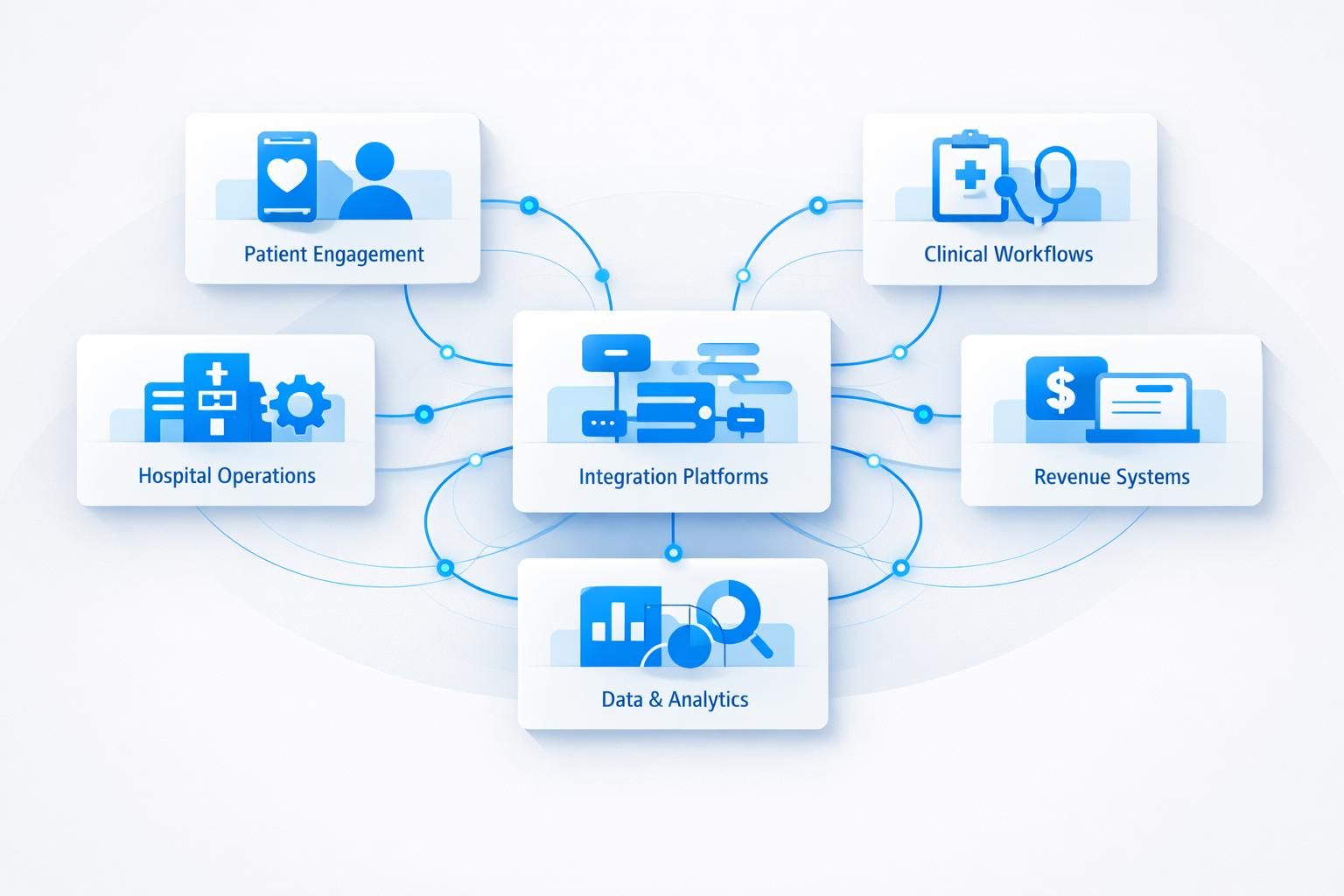
Online access to appointments, reports, forms, and communication.
Manage patients, doctors, schedules, billing, and daily operations.
Video consultations, digital prescriptions, and remote care workflows.
Connect EHR, labs, payments, insurance, and communication tools.
Why Clinics and HealthTech Startups Choose Custom Healthcare Software
Many healthcare teams start with off-the-shelf software because it is quick to buy. But over time, the limitations become clear.
1. Better Fit for Real Clinical Workflows
Every healthcare organization works differently. A dermatology clinic, diagnostic center, physiotherapy clinic, mental health platform, and multi-location specialty clinic do not follow the same patient journey.
2. Improved Patient Experience
Patients expect healthcare to feel smooth. They want to book appointments online, receive reminders, upload documents, complete forms before the visit, view reports, make payments, and communicate easily.
3. Less Manual Admin Work
Many clinics still depend on phone calls, paper forms, WhatsApp messages, spreadsheets, and manual reminders. Custom healthcare software can automate appointment confirmations, reminders, patient intake, billing updates, and follow-up messages.
4. Safer Data Handling
A well-built system can include role-based access, secure login, encryption, audit logs, backup processes, consent management, and controlled data sharing.
5. Easier Integration With Other Systems
Custom software can connect appointment systems, EHR, billing, insurance, labs, communication, analytics, and payment tools so data does not stay trapped in separate platforms.
Custom Healthcare Software vs Off-the-Shelf Software
| Factor | Off-the-Shelf Software | Custom Healthcare Software |
|---|---|---|
| Setup speed | Faster to start | Takes planning and development |
| Flexibility | Limited | High |
| Workflow fit | Generic | Built around your process |
| Scalability | Depends on vendor | Can be planned from the start |
| Integrations | Limited to available options | Can be built around your ecosystem |
Key Features to Include in Custom Healthcare Software
Patient Management
Patient profiles, medical history, visit records, documents, prescriptions, reports, and communication history.
Appointment Scheduling
Doctor availability, appointment types, reminders, cancellations, rescheduling, and waitlists.
Patient Portal
Online booking, form submission, report access, payments, prescriptions, and secure messages.
Doctor Dashboard
Simple dashboards for patient queues, clinical notes, appointment views, and treatment updates.
Telehealth
Video consultations, digital prescriptions, appointment links, consent, and file sharing.
Analytics
Reports for no-shows, revenue, doctor utilization, patient retention, and operational bottlenecks.
Security and Compliance Considerations
Security cannot be added at the end of a healthcare software project. It should be part of the plan from day one.
A healthcare platform may require different compliance measures depending on the country, users, business model, and the type of data handled.
- Role-based access control
- Multi-factor authentication
- Data encryption
- Secure APIs
- Audit logs
- Session timeout
- Data backup and recovery
- Consent management
- Secure hosting
- Regular vulnerability testing
For clinics and startups, this is not only about legal safety. It is also about trust. Patients trust you with deeply personal information. Your software should respect that trust.
Development Process for Custom Healthcare Software
Step 1: Discovery and Workflow Mapping
Understand your users, goals, current workflow, pain points, compliance needs, and existing tools.
Step 2: Feature Prioritization
Start with the features that create the most value with the least complexity.
Step 3: UX and UI Design
Design simple screens for doctors, staff, admins, and patients.
Step 4: Architecture and Technology Planning
Plan data flow, APIs, hosting, security, user roles, backups, and future growth.
Step 5: Development
Build the frontend, backend, dashboards, patient portals, mobile apps, and integrations in phases.
Step 6: Testing
Test usability, performance, security, data accuracy, access control, and workflow errors.
Step 7: Launch and Training
Support staff training, documentation, migration, and feedback collection.
Step 8: Continuous Improvement
Improve the platform as your clinic, startup, users, and workflows grow.
How Much Does Custom Healthcare Software Development Cost?
The cost depends on scope, complexity, design, integrations, compliance needs, platforms, and team structure.
A simple internal clinic tool will cost less than a full EHR platform, telehealth product, or multi-location healthcare management system.
Main cost factors include number of user roles, patient portal complexity, dashboard requirements, mobile apps, EHR integrations, security requirements, data migration, analytics, automation workflows, and long-term maintenance.
The better question is not “What is the cheapest way to build this?” The better question is “What is the safest and most practical way to build the first version without wasting money?”
Common Mistakes to Avoid
- Building too many features too early: Start with the biggest problem first.
- Ignoring real users: Talk to doctors, nurses, front-desk staff, patients, and admins.
- Treating compliance as an afterthought: Plan security from day one.
- Poor integration planning: Ensure your software integrates with existing tools.
- Weak data structure: Poor data planning creates reporting and migration issues later.
- Complicated design: Simple design wins in healthcare.
How to Choose the Right Healthcare Software Development Partner
The right development partner should understand both software and healthcare workflows.
Look for a team that asks practical questions about your patient journey, staff roles, appointment types, compliance needs, current tools, reporting expectations, and growth plans.
Questions to Ask Before Hiring
- Have you built healthcare or HealthTech software before?
- How do you approach patient data security?
- Can you support EHR, payment, insurance, or communication integrations?
- How do you handle role-based access and audit logs?
- Can you help us plan an MVP?
- What happens after launch?
When Should You Invest in Custom Healthcare Software?
You should consider custom healthcare software development if:
- Your clinic depends too much on manual work
- Patients face delays in booking, forms, reports, or communication
- Your current software does not match your workflow
- You are managing data across too many disconnected tools
- Your HealthTech startup needs a unique product
- You need better control over features and user experience
- You want secure integrations with other healthcare systems
- You are planning to scale across locations, users, or services
Planning a Custom Healthcare Software Product?
Start with the real problem. Map the workflow. Prioritize the first version carefully. Keep the design simple. Build security from day one.
FAQs About Custom Healthcare Software Development
What is custom healthcare software development?
Custom healthcare software development is the process of building software around the specific needs of a clinic, healthcare organization, or HealthTech startup.
Why do clinics need custom healthcare software?
Clinics need custom healthcare software when ready-made tools do not match their workflow. It helps reduce manual tasks, improve appointment management, and support patient communication.
Is custom healthcare software better than off-the-shelf software?
Custom software is better when your workflow is unique, your team needs specific features, or your platform is part of your business model.
What features should healthcare software include?
Common features include patient management, appointment scheduling, patient portal, doctor dashboard, billing, telehealth, notifications, analytics, and role-based access.
Can healthcare software integrate with EHR systems?
Yes. Custom healthcare software can integrate with EHR systems, billing tools, labs, insurance platforms, payment gateways, and communication systems depending on available APIs.